Future-Forward Technologies: A Comprehensive Guide
Chosen theme: Future-Forward Technologies: A Comprehensive Guide. Step into an inspiring, practical, and human-centered exploration of what’s next—where imagination meets engineering, and today’s choices shape tomorrow’s breakthroughs. Subscribe, comment, and join a community that experiments thoughtfully, learns fast, and shares openly.
We’ve entered an age where AI doesn’t replace your skills; it amplifies them. Designers sketch faster, doctors spot anomalies earlier, and writers research smarter, all while steering the final voice.
AI With a Human Touch
Transparent datasets, bias checks, and clear explanations aren’t just ethical—they build trust. Teams that measure impact and invite feedback turn responsible AI into better products, stronger brands, and lasting loyalty.
AI With a Human Touch
Try automating one repetitive task this week—summarize meetings, tag photos, or draft emails. Share your outcome in the comments and inspire others to iterate toward meaningful, future-forward improvements.
Edge Computing and the Rise of Ambient Intelligence
01
Milliseconds Matter
From industrial robotics to AR navigation, edge processing trims latency dramatically. When decisions happen on-site, systems respond instantly, saving energy, costs, and sometimes even lives in safety-critical environments.
02
Privacy by Design
Processing locally keeps personal details on your device, minimizing cloud exposure. This architecture supports stronger compliance and builds confidence that future-forward technologies respect user autonomy by default.
03
Get Involved: Build a Tiny Edge Project
Deploy a small sensor on a microcontroller to detect temperature or sound, then visualize results on a dashboard. Post your lessons learned below, and we’ll feature standout projects in our newsletter.
Quantum Computing, Demystified
What Makes Quantum Different
Qubits harness superposition and entanglement, exploring multiple possibilities at once. That’s why routing, materials design, and drug discovery could accelerate beyond classical limits—once error rates drop further.
You can prototype algorithms on cloud simulators without owning a lab. Learn basics like Grover’s and variational circuits to prepare your team for future-forward technologies that mature over the decade.
A graduate chemist ran a quantum-inspired simulation of molecular interactions and found a surprising pathway to reduce reaction time. Share your curiosity below—what problem would you test first?
Continuous metrics—heart rate variability, sleep stages, glucose levels—guide daily choices with real data. Future-forward technologies make subtle patterns visible so you can adjust routines before problems escalate.
Gene editing offers lifesaving possibilities but demands guardrails. Transparent governance, public dialogue, and equitable access ensure innovation serves people broadly, not just those with the loudest voices.
What health insights would you share for better care, and where would you draw the line? Comment your stance to help shape responsible, human-centered biotech progress.
Greener Data Centers
Liquid cooling, smarter workload scheduling, and renewable siting cut emissions dramatically. Future-forward technologies optimize electricity use hour-by-hour, aligning compute intensity with clean energy availability.
The Circular Hardware Mindset
Modular designs, repairability, and certified refurbishing keep devices useful longer. Small purchasing shifts by teams compound into big environmental wins across supply chains and communities.
Challenge: Audit Your Digital Footprint
Measure the energy impact of your workflows for one week—cloud jobs, builds, and backups. Share findings and pledges below; we’ll compile the best ideas into a practical community checklist.
Spatial Interfaces: AR, VR, and the Metaverse Reimagined
Hands-On Learning, Literally
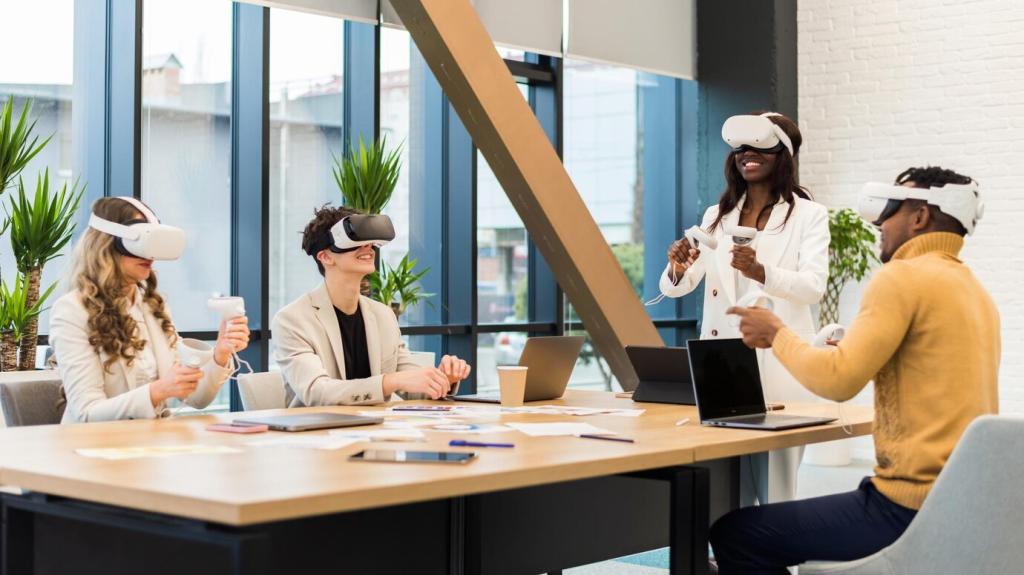
A maintenance trainee can practice complex repairs using AR overlays on real equipment, cutting errors and costs while building confidence through safe, repeatable, real-time guidance in context.
Designing for Comfort and Inclusion
Great spatial experiences minimize motion sickness, support multiple input methods, and respect diverse bodies and abilities. Future-forward technologies are empathetic, not just immersive for their own sake.
Try This: A Micro AR Prototype
Mock a spatial workflow on a phone using simple markers. Share a brief video of your prototype and what problem it tackles; we’ll highlight standout ideas in an upcoming roundup.