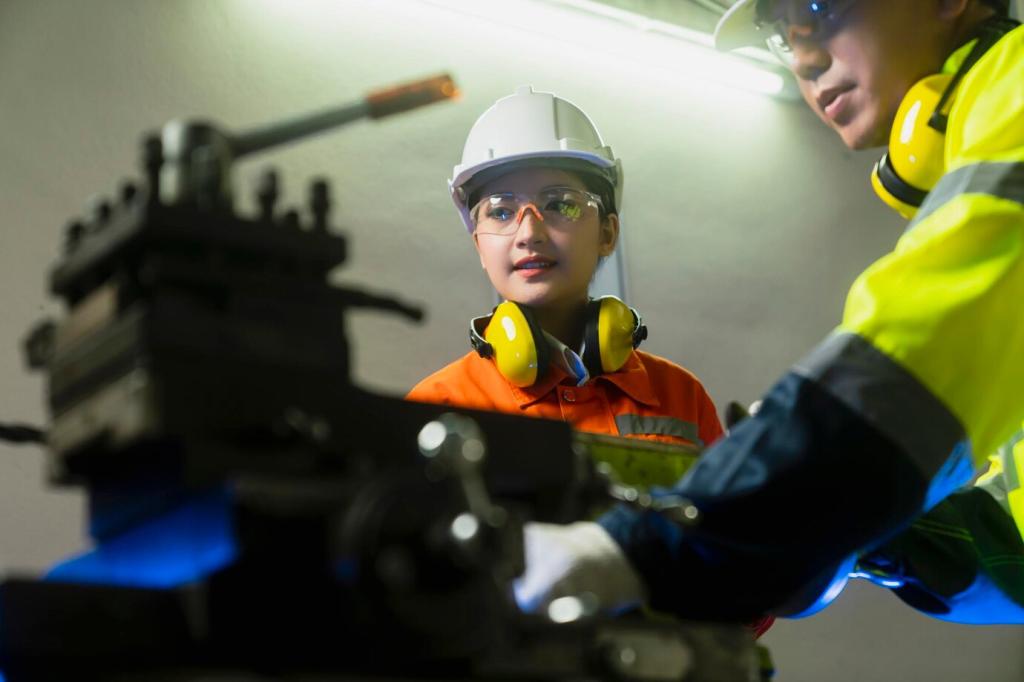

The Future is Now: Key Technological Innovations

Today’s chosen theme: The Future is Now: Key Technological Innovations. Explore breakthroughs reshaping daily life and global industries, through stories, practical insights, and bold ideas you can put to work. Join the conversation, subscribe for deep dives, and help us chart what comes next.

AI Everywhere: From Assistance to Autonomy

A neighborhood clinic piloted an AI triage assistant that listened first, summarized second, and routed patients with a gentle prompt—reducing confusion and noticeably shortening waits. When technology respects context, people trust it. Have you seen a small AI change with big human impact? Tell us.

AI Everywhere: From Assistance to Autonomy

Designers storyboard faster, engineers prototype code snippets, and musicians riff on unexpected harmonies with generative tools. The craft isn’t replaced; it’s reimagined. The best results start with clear intention and careful iteration. Share your favorite prompt strategy and subscribe for our upcoming creative workflow guide.

AI Everywhere: From Assistance to Autonomy

Processing on the device reduces latency, improves privacy, and unlocks new experiences—from real‑time translation in noisy streets to safety features that work offline. Picture smart glasses translating signs as you walk. Which edge use case would most improve your day? Drop a note and let’s compare.

AI Everywhere: From Assistance to Autonomy

Lorem ipsum dolor sit amet, consectetur adipiscing elit. Ut elit tellus, luctus nec ullamcorper mattis, pulvinar dapibus leo.


Quantum Leaps: Computing Beyond Classical Limits

A materials team used quantum‑inspired methods to explore electrolyte options for safer batteries, narrowing candidates before costly lab work. That blend of quantum intuition and classical muscle saved time and waste. Curious where quantum could aid your domain? Tell us your toughest search or simulation bottleneck.

Quantum Leaps: Computing Beyond Classical Limits

Preparing for quantum‑resistant security starts with a simple inventory: what systems use long‑lived data, keys, or certificates? NIST’s post‑quantum standards are arriving, and migration takes planning. Begin the roadmap today, and subscribe for our checklist to assess risk without alarmism or jargon.

Clean Tech Renaissance: Powering a Sustainable Planet

Solid‑state and sodium‑ion chemistries promise safer, cheaper storage, while vehicle‑to‑grid pilots turn parked cars into neighborhood buffers. After a storm, a local microgrid kept lights on thanks to smart storage dispatch. Which storage innovation would you adopt first at home? Share your reasoning with us.

Clean Tech Renaissance: Powering a Sustainable Planet

Electrolyzers powered by renewables can produce hydrogen for steelmaking, shipping, and high‑temperature processes. The transition hinges on clean electricity, infrastructure, and pragmatic policy. If your organization touches logistics or heat, how are you planning for hydrogen? Comment and we’ll compile sector‑specific insights.
With the first CRISPR‑based therapy approved in 2023, gene editing moved from promise to practice. Patients and clinicians now face practical questions about access, safety, and long‑term monitoring. What ethical safeguard matters most to you—equity, consent, or transparency? Join the discussion and share your view.

Spatial Computing: Blending Digital and Physical Worlds

Augmented reality at work

A field technician glances at a valve and sees step‑by‑step overlays, hands free, while a remote expert annotates in real time. Training becomes lighter, mistakes rarer, and confidence higher. Would AR help your team upskill faster? Share a task you’d love to augment.

Interoperable 3D standards

Open formats like glTF, USD, and OpenXR help assets travel across tools and devices. Portability prevents costly rebuilds and unlocks healthier ecosystems. Developers, which standard has saved you the most time, and where does interoperability still hurt? Tell us and we’ll spotlight real fixes.

Natural interfaces and haptics

Hand tracking, voice, and subtle haptics make computing feel conversational. The best experiences fade into the background, letting you focus on the task, not the tool. What gesture or feedback feels most intuitive to you? Subscribe for our upcoming interface design field notes.
Getquestus
Privacy Overview

This website uses cookies so that we can provide you with the best user experience possible. Cookie information is stored in your browser and performs functions such as recognising you when you return to our website and helping our team to understand which sections of the website you find most interesting and useful.